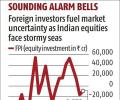
Foreign portfolio investors (FPIs) have withdrawn Rs 25,305 crore from domestic markets since September. FPIs were net sellers in the first two months of 2023, but from March to August, they purchased equities worth Rs 1.7 trillion. This selling trend has caused the National Stock Exchange Nifty Index to decline by 3.2 per cent from its September highs. FPI selling initially began in September as profit-taking but intensified due to rising US bond yields and uncertainty regarding the rate hike trajectory.

From the Sensex firms, Hindustan Unilever, Kotak Mahindra Bank, Trent, Reliance Industries, Asian Paints and ITC were among the gainers. However, Bharat Electronics Ltd, Tech Mahindra, UltraTech Cement, Maruti and Eternal were among the laggards.

While a price cut will go down very well with people who have been struggling to cope with inflation, it would be irresponsible on the part of the government to cut prices.
Energy-hungry India, which is 70 per cent import dependant to meet its crude oil requirement, is mounting diplomatic initiatives to secure oil and gas from Gulf, Russia and Africa, Foreign Minister K Natwar Singh said in New Delhi on Wednesday.
India's merchandise exports in April 2024 marginally rose to $34.99 billion from $34.62 billion in the year-ago month, according to government data released on Wednesday. Imports too increased to $54.09 billion from $49.06 billion in April 2023.

Share markets will have only three trading days this week with Monday and Wednesday being holidays due to general elections in Mumbai and Maharashtra Day, respectively.
According to SBI Ecowrap, every $10/barrel increase in oil price results in additional import bill of $8 billion.

Stock markets will be largely driven by global trends and macroeconomic data announcements in a holiday-shortened week which may see volatility amid monthly derivatives expiry, say analysts. Equity markets will remain closed on Monday for Gurunanak Jayanti. Trading activity of foreign investors and the movement of the rupee against the dollar will also be tracked by investors.

India and the visiting US officials have decided to hold a wrap-up session on Saturday morning to conclude the three-day talks on the proposed bilateral trade agreement, government sources said. They said the discussions are at a "very" early stage.

Officials from India's biggest private refiner recently visited Iran to chalk out the details for resumption of trade ties with Tehran.

Of Trump's reciprocal tariffs and trade deals
India has asked oil cartel Organization of the Petroleum Exporting Countries to raise crude oil production to stem the relentless rise in international oil prices that have threatened to derail import dependent economies such as India.

'Saudi-Pak defence pact is to anchor the defence and security of Saudi Arabia and not Pakistan, per se, with Islamabad being the junior partner.'

Russia has welcomed India's decision to not support the price cap on Russian oil announced by G7 and its allies and offered it cooperation on leasing and building large-capacity ships to overcome the ban on insurance services and tanker chartering in the European Union and Britain to continue buying discounted oil. The offer came as Russian Deputy Prime Minister Alexander Novak held a meeting with the Indian Ambassador to Moscow, Pavan Kapoor, on Friday. "The Deputy Prime Minister welcomed India's decision not to support the price cap on Russian oil, which was imposed on December 5 by the G7 countries and their allies," the Russian foreign ministry said in a statement.

Russian energy giant Rosneft has appointed a former Indian Oil Corporation (IOC) director to its board in signs it may be looking at boosting trade links with India. G K Satish, who retired as director for business development at IOC in 2021, is one of the three new faces appointed to the 11-strong board of directors of Rosneft, according to a statement issued by the Russian firm. Satish, 62, is the first Indian to be appointed to the board of Rosneft.

Investors turned cautious after India's trade deficit widened to a more than three-and-a-half-year high of $16.6 billion due to costlier crude oil imports
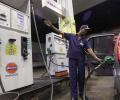
Six non-BJP ruled states -- West Bengal, Tamil Nadu, Andhra Pradesh, Telengana, Kerala and Jharkhand -- have not reduced the VAT on petroleum products, leading to higher prices of petrol and diesel there, Petroleum Minister Hardeep Singh Puri said on Thursday. Puri said in Lok Sabha that the central government has reduced excise duty on petroleum products and some other states, following cues, reduced their Value Added Tax (VAT). Six states -- West Bengal, Tamil Nadu, Andhra Pradesh, Telengana, Kerala and Jharkhand -- have not reduced the VAT, he said amidst vocal protests by the opposition members.

India's current account deficit is expected to deteriorate in the current fiscal on account of costlier imports and tepid merchandise exports, according to the Finance Ministry's monthly economic review. The review released on Thursday by the ministry also said that global headwinds would continue to pose a downside risk to growth as crude oil and edibles, which have driven inflation in India, remain major imported components in the consumption basket. For the present, it said, "their global prices have softened, as fears of recession have dampened prices somewhat. This would weaken inflationary pressures in India and rein in inflation."

It cannot, however, use the money to invest in India or buy shares or companies.
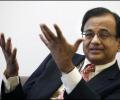
Chidambaram said he expected gold imports to touch $40 billion in the current fiscal year to end-March, down 31 percent from the year-ago bill of $58 billion.
After the latest spike in crude oil prices, petrol prices could potentially go up to around Rs 90 a litre making a dent in the consumer's wallet. This, the analysts fear, will push the cost of vehicle ownership in the country, further reducing the demand potential for the industry.

'...it should not delude itself into thinking that India's security or its great-power ambitions will be advanced by those partnerships.'
'Instead, what India should focus on is on riding out the next three-and-a-half years of Trump's presidency with minimal damage to itself.'

India's rupee is likely to remain under pressure due to high prices of crude oil and other commodities, and may stabilise at around 79-80 against the US dollar in the near term, say experts amid limited headroom available with the Reserve Bank to check the weakening of the domestic currency. The currency has slumped over 5 per cent this year after Russia's invasion of Ukraine sent international crude oil prices soaring to a decade high. On Monday, rupee ended at a fresh all-time low of 78.34 (provisional) against the US dollar.

India on Tuesday pitched for a stake in vast oil and gas fields as well as LNG terminals in the frozen Artic of Far East Russia as it looked to import more oil from the former Soviet republic as part of a strategy to diversify its energy basket.

The rupee fell by 41 paise to close at a fresh lifetime low of 79.36 (provisional) against the US dollar on Tuesday amid a strong greenback overseas and unrelenting foreign fund outflows. At the interbank forex market, the local unit opened at 79.04 against the greenback and witnessed an intra-day high of 79.02 and a low of 79.38. It finally settled at 79.36 (provisional), down 41 paise over its previous close.

The era where nations thrived through rigid alignments is giving way to an age where the connective State defines power. For India, that era has arrived, points out Dr Nishakant Ojha.
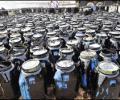
Little over 1 million barrels were exported to India in February, 794,200 barrels were exported in March and none at all in January.
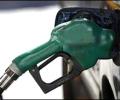
Basket of crude up 6%, while rupee has depreciated nearly 14% leading to losses
India will invest $1 billion every year in acquiring oil and gas fields abroad in order to cut dependence on highly volatile international market for its crude oil requirement, Petroleum Secretary B K Chaturvedi said on Friday.

Benchmark stock indices Sensex and Nifty rebounded on Thursday after two days of decline, mirroring a rally in global markets as a US court blocked President Donald Trump's reciprocal tariffs. The 30-share BSE Sensex climbed 320.70 points or 0.39 per cent to settle at 81,633.02.
.jpg)
India, which is 79 per cent dependent on imports to meet its crude oil needs, is building underground storage at Visakhapatnam in Andhra Pradesh and Mangalore and Padur in Karnataka.

Sensex lost 184 points to trade at 23,878 and the Nifty has dropped 55 points to quote at 7,254.

Diesel price on Monday was hiked by 25 paise per litre -- the third increase since last week -- and more rate hikes for both diesel and petrol are in the offing in the coming days as international oil prices have soared to a three-year high. The price of diesel was hiked to Rs 89.32 per litre in Delhi and to Rs 96.94 in Mumbai, according to a price notification of state-owned fuel retailers. This is the second straight day of increase in diesel prices and the third since September 24 when the state-owned oil firms ended a three-week hiatus in rates.

Equity benchmarks declined on Tuesday after a three-day rally, with the Sensex falling 359.33 points amid selling in index majors HDFC, Reliance Industries and Infosys. Investors were cautious ahead of release of GDP data, while a jump in crude oil prices also weighed on market sentiment, traders said. The 30-share BSE Sensex went lower by 359.33 points or 0.64 per cent to settle at 55,566.41.

Equity investors are up for an eventful trading week ahead as the 90-day suspension period of the reciprocal tariffs announced by US President Donald Trump ends on July 9, analysts said, adding that a positive outcome from the trade negotiations could further lift market sentiment, particularly benefiting trade-sensitive sectors.
United States Secretary of States Hillary Clinton on Monday announced Obama administration's decision to exempt India and six other countries from US economic sanctions after they significantly reduced their imports of Iranian oil.

A massive drone strike on the world's largest crude-processing facility operated by Saudi Arabia's Aramco has driven oil prices to their highest level in nearly four months. The attack has knocked out over half of Saudi Arabia's production as it cut 5.7 million barrels per day or over 5 per cent of the world's supply.

Petrol price on Monday was hiked by 30 paise a litre and diesel by 35 paise, taking the total increase in rates in the last one week to Rs 4-4.10 per litre. Petrol in Delhi will now cost Rs 99.41 per litre as against Rs 99.11 previously while diesel rates have gone up from Rs 90.42 per litre to Rs 90.77, according to a price notification of state fuel retailers. Rates have been increased across the country and vary from state to state depending upon the incidence of local taxation.
The nation is looking at using lower rig rates and oil field services that are likely to result from fall in international oil prices and global recession to comb the unexplored areas, so that its import dependence could be cut. So far, 206 blocks have been awarded under seven rounds of bidding under the New Exploration Licensing Policy.

Lower crude prices mean less government outlay for India,
